The citizens of Billund Municipality are very good at sorting their household waste. The thorough sorting has resulted in Billund Vand A/S being very successful with energy utilization in a biogas plant. It is an environmentally friendly conversion of source-sorted waste into biogas. The waste has a purity of 99 %, and thus a very low missorting percentage compared to what is achieved elsewhere. That is an important message to pass on. Both the value in it, but also purely practical to teach others how to best sort waste.
Director Ole P. Johnsen from Billund Vand A/S states: "The energy content of hand-sorted waste is much higher than waste that is sorted by a mechanical system, and if citizens can learn to sort their waste successfully, it can be disregarded from costs for the acquisition and maintenance of a mechanical sorting plant.”
"It had to be investigated what the citizens of Billund Municipality can do that no one else has found out, and which makes them unique..."
In order to put into words the formula for success and make it usable for the benefit of others, Billund Vand A/S hired the consultancy Copenhagen Living Lab. The aim was to shed light on the behavior and motivation behind the successful sorting of household waste. It had to be investigated what the citizens of Billund Municipality can do that no one else has found out, and which makes them unique compared to the rest of the country.
Here it was decided to solve the task through user-driven innovation. Where the starting point is the users and their experiences with waste sorting. To clarify and map their behaviour, situations and needs. And because the results of the studies are so important to get out to citizens in other municipalities, Billund Vand A/S has now established a spin off company which focuses on knowledge collection and sharing as well as the energy production itself.
Hans Henrik Agger, CEO of the Copenhagen Living Lab consultancy, says: "The purpose of the task is simple, and it is a really good example of how user-driven innovation works. Innovation is about turning good ideas into positive change. And that is what we have to make sure will happen with Billund Vand A/S as a role model.”
Copenhagen Living Lab and Billund Vand A/S have set the framework for the innovation process, and they have come up with a number of result targets which will create:
At Copenhagen Living Lab, emphasis is placed on the close collaboration between company and consultant, and it is important that both parties take part in meeting the performance targets. The result targets must be achieved through the innovation process, which is built up in work phases. In the start-up phase, it is about finding a focus and a common direction, and they chose to do that here with a kick-off workshop.
The workshop was held at Billund Vand A/S as one of the first, as the purpose, among other things, was to get the participants to gain ownership of the entire project and thus have a common starting point. Clarity was also created about the individual project parts, and responsibility for the parts was distributed between the participants to ensure a successful completion of the entire process.
"The work was quickly concentrated on what the participants' expectations were for the project, and we drew up an action plan for how we can involve the citizens' experiences." says Ole P. Johnsen about the workshop, which he believes is incredibly valuable for the rest of the course.
Questions such as: Why is the task important to you as a workplace? What change would you like to create in reality? Why is the task relevant and what is known in advance about the area? were answered, and the participants got a clear sense of the expectations for the course, its goals and tasks.
In order to gain the greatest possible insight into the users' behaviour, an ethnographic segmentation of the users to be investigated was made. If you ask Copenhagen Living Lab what ethnography is about, the answer is:
"It's about gathering knowledge about the culture the users live in, because it can provide the recipe for their behavior, as well as deeper insight into their everyday life and needs. Here, for example, the users could be divided into three segments; the very young, families with children and the elderly. We also focus on ownership in relation to the project through the difference between homeowners with their own waste bins and tenants with shared waste bins. When we talk about the cultural differences, they show, among other things, in the difference between newcomers and permanent residents, who have a stronger connection to the area.”
The consultancy also calls it innovative ethnography, which includes research design and qualitative analysis based on fieldwork (interviews and observation).
Segmentation takes up a relatively large amount of time in the innovation process, as work is done with several different segments. It emphasizes that the mapping of the segments and the surrounding culture is important before it is even possible to convey the message properly.
Mapping of user behavior in relation to source sorting of waste
Description of specific factors that are important for customers' motivation and behaviour

The collaboration is still so new that Billund Vand A/S has not yet achieved measurable results, and the challenge will always be whether the users will actually get involved sufficiently in the project, so that there is fertile ground for achieving the goals. According to Ole P. Johnsen, they are already experiencing that the users get involved positively. They are actually proud to deliver well-sorted waste to Billund Vand A/S, and that they are thus helping to spread the good news.
"We will contribute to testing the scheme and there through user-driven innovation in an experiment with the neighboring municipality, Vejen Municipality. Thereby, we get to test whether the right tools are being used, which can hopefully minimize missorting and thus keep the costs for processing household waste down to the same low level as in Billund Municipality." says Ole P. Johnsen, who would recommend other companies in the same situation to try user-driven innovation when it comes to dissemination and sharing of valuable and useful knowledge.
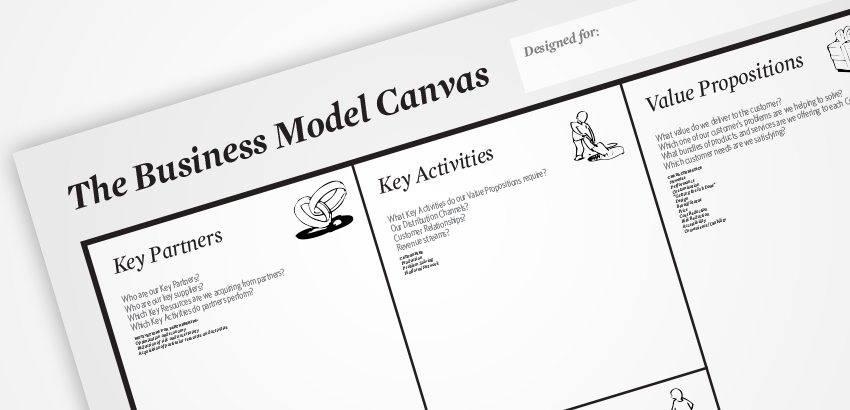
The project will result in a catalog of ideas for optimizing customer behavior so that the good experiences from Billund Municipality can be retained and passed on to other municipalities. In this connection, Copenhagen Living Lab will also help to prepare a business model that aims to develop a professional advisory activity in the waste, supply and energy fields.
See more:
Building an innovation process >
Last updated 29 July 2015