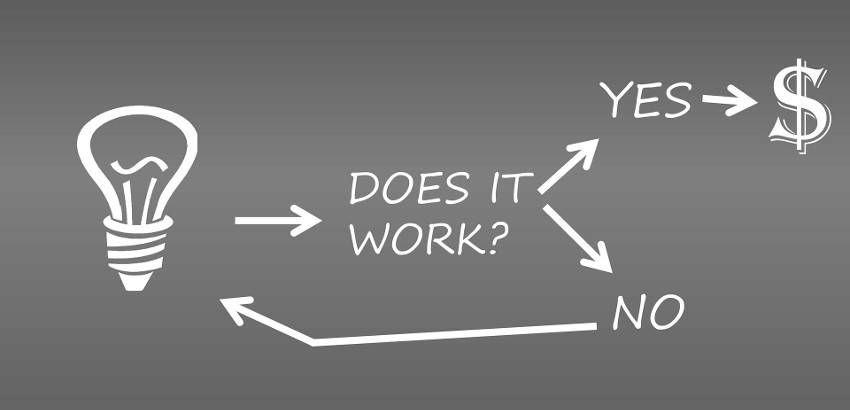
The word is a contraction of crowd and outsourcing. The method functions as a problem-solving and production process that involves outsourcing tasks to a (relevant) network of people – also known as the crowd. The principle is that more heads think better than one.
There are several forms of crowdsourcing, and we will give you insight into them in this article. A well-known example of one of the forms of crowdsourcing can be seen at Wikipedia. Wikipedia does not create the content for the encyclopedia itself, and thus does not hire journalists, editors and experts. Instead, they give the crowd the opportunity to create the content themselves. The result is a product that is created by the users.
In an article in Jyllands Posten, you can read that other large companies such as LEGO, Coca-Cola, Dell and Starbucks are also known for involving users. Peter Svarre, expert in social media and digital strategy, states in the article that crowdsourcing is more effective in smaller companies. Most often, the big companies do not use crowdsourcing for its actual purpose, and it often ends up as an advertising gimmick, where the users are invited inside to create an advertising campaign or something else, which in reality means nothing to the company.
Crowdsourcing does not require many people to be effective, and especially when it comes to product development, it works best with a few people who are truly experts in a field. It's about finding the people who are passionate about the task and want to be part of the process, says Peter Svarre to JP.
Crowdsourcing is also an inexpensive way for small businesses to develop and innovate, and it can be done in several ways. Here are five of them, and a number of links that can help you further, so you can get started yourself.
Crowdsourced Design
If you need a new logo designed, you can send it out to a network of designers with a description of what you are looking for, how much you want to pay and your deadline. The interested designers will each create a finished design especially for you. This way you will get anywhere between 0 and 500 (maybe more) different logos to choose from. You choose the one you like best and pay the designer afterwards. Crowdsourcing can also be used for the design of furniture, fashion clothing, advertising, video and much more.
Crowdfunding
Crowdfunding gives you the opportunity to seek money for a project. You find the right platform to search from by adapting the amount of people you address to your particular project. With a description of the project, you ask a group of people (potential funders) if they want to donate money to your project. In the description, you must also include the desired amount, your deadline and the reward that the donor will receive. Remember that most people will think 'what's in it for me' when they now support your project with DKK xx. This is completely natural - and very reasonable. Some funders are more or less indifferent to the reward, and are just there to be able to support the project, which they find exciting, interesting or enriching. With the rewards, you show that you understand that there is a bit of 'barter barter merchant' in crowdfunding. You must collect the entire requested amount before your deadline, otherwise you must return the donations to the donors again. A deadline is typically less than 60 days. For example, if you are looking for funding for a play, then the reward can be 2 tickets, or if you want to produce a new product, then those who give money get the product.
Micro tasks
Micro-task solving is a form of crowdsourcing that allows you to break a large task down into several micro-parts, which you then send out to a group of people. An example could be if you have 1000 images on your website that lack captions, then you can ask a group if they each want to put in a number of captions and in this way divide the task. You set a price for each micro-task. With micro-tasking, you can expect to see results immediately. Other micro-tasks can be, for example, scanning images, cropping images, proofreading, corrections in databases, transcription of audio files and much more.
Open Innovation
If you are unsure where to start with an idea for a new business area, a new product or your new marketing strategy, you can crowdsource through open innovation. Open innovation allows investors, designers, inventors, marketers and many others to collaborate and make your idea a reality. This can be done either via a special web platform, where the crowd can "meet" and provide input, or it can also be used internally for the employees, where you utilize the strengths across departments.
Open innovation is open in the broadest sense, and can bring together people from different parts of the world and different sectors of business to work together on a project. It provides a unique opportunity to utilize different expertise that would not otherwise be available to small businesses.
Read more in our theme about open innovation here >
Crowd voting
Crowdvoting is when a website collects the opinions and attitudes of a large group of people within a specific topic. An example of how crowdvoting works can be seen at www.threadless.com, which sells t-shirts. Users provide designs, and the t-shirts that receive the most votes from users are produced and sold. Even though it's a small business, thousands of people vote and submit designs. The products are exclusively created and selected by "the crowd".
See also our videos about social media here >
Benefits and requirements
The main advantage of crowdsourcing when it works optimally is that the quality of the product that comes out of the process is high. It is based on several people – rather than just one – providing their best ideas, skills and support. Crowdsourcing allows you to select the best result from a sea of “best submissions,” as opposed to receiving the best submission from a single vendor. The results can be delivered much faster than traditional methods, as crowdsourcing is a form of freelancing. You can have a finished video within a month, a finished design or idea within a week, and micro tasks solved in a matter of minutes.
For crowdsourcing to work optimally, it requires clear instructions from you. You may end up with a product that falls short of your wishes if the instructions are not clearly understood by the crowd. Quality can be difficult to judge if your expectations are not clearly stated.
This is how you get started
Links to websites that specialize in different types of crowdsourcing.
www.crowdfunder.co.uk
www.sponsume.com
www.boomerang.dk
www.kickstarter.com
www.crowdrise.com
www.designcrowd.com/crowdsourcing
Source: "The Rise of Crowdsourcing". Wired Magazine, June 2006
Source: "Crowdsourcing is also for the little ones". JP, Career, March 31, 2013
Source: www.dailycrowdsource.com