Denial is probably the most common response to change, but, Scott and Jaffe say, also the most difficult. Denial is the psychological term for one's defense against change. And consists in ignoring or avoiding reacting to information that requires change. "Denial is an attempt to maintain past success and security by ignoring that the past is over," they write in Mastering the Change Curve (2003).
In the Denial phase, the change does not penetrate and you do not believe that it is changeable. You continue with "business as usual" and avoid thinking and acting on the coming change.
Paradoxically, denial is difficult to identify in oneself. We are often not aware that we are denying change, and it is therefore often necessary for others to confront and inform us of our denial behavior. This can become a major problem when groups of employees are in denial about the state of affairs at the same time, as the entire organization can be in the Denial phase at once.
You reach the Resistance Phase when you wake up from your denial and discover that change WILL happen. When you are in the resistance phase, you feel unable to change. You still feel an attachment to the past and the known ways of doing things, but you will also experience a wide range of unpleasant feelings and reactions to the change.
Everyone experiences resistance to change. This is a natural reaction and no matter how exciting the change is, you will still feel some anxiety and worry about the upcoming change.
As you approach the end of the Resistance Phase, you come to an acceptance of the change, you begin to let go of the past and consider how you can make the change work for you.
The authors call this the fun phase, full of energy and willingness to learn new things and try new methods. Generally, people have accepted the change and are ready to look at the situation, clarify goals and explore alternatives.
In the Exploration phase, you start trading and learn new tricks and decide you want to act on the change. You now stop fighting the change and start thinking about how to make it work.
As you move up the lower part of the curve, you begin to accept the change and believe that you can handle it. The best thing you can do is create a vision for what it is you want to achieve and work with others involved to make it happen. The researchers say that it is normal to zigzag between Resistance and Exploration.
You have reached the Support phase when you have found out which skills you need to master the new times. You will regain your productivity and sense of mastery. You probably also experience a feeling that you have "made it" through the change; that it is over. But, because change is continuous, you also need to prepare for the next change.
This is not a particularly excited period, rather a pleasant one.
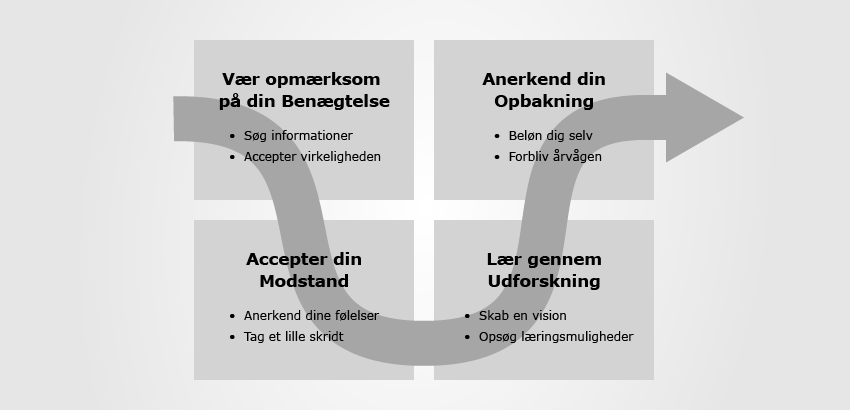
The graphic below shows the key things you need to be aware of as you move through each phase of change.